
A secretive and highly lucrative marketplace has emerged around the executive clemency process in Washington, where political operatives and self-styled influencers promise direct access to the Oval Office for exorbitant sums. Rather than navigating standard legal channels, convicted individuals are increasingly turning to well-connected intermediaries who claim they can secure presidential pardons through relentless pressure campaigns and high-level personal connections.
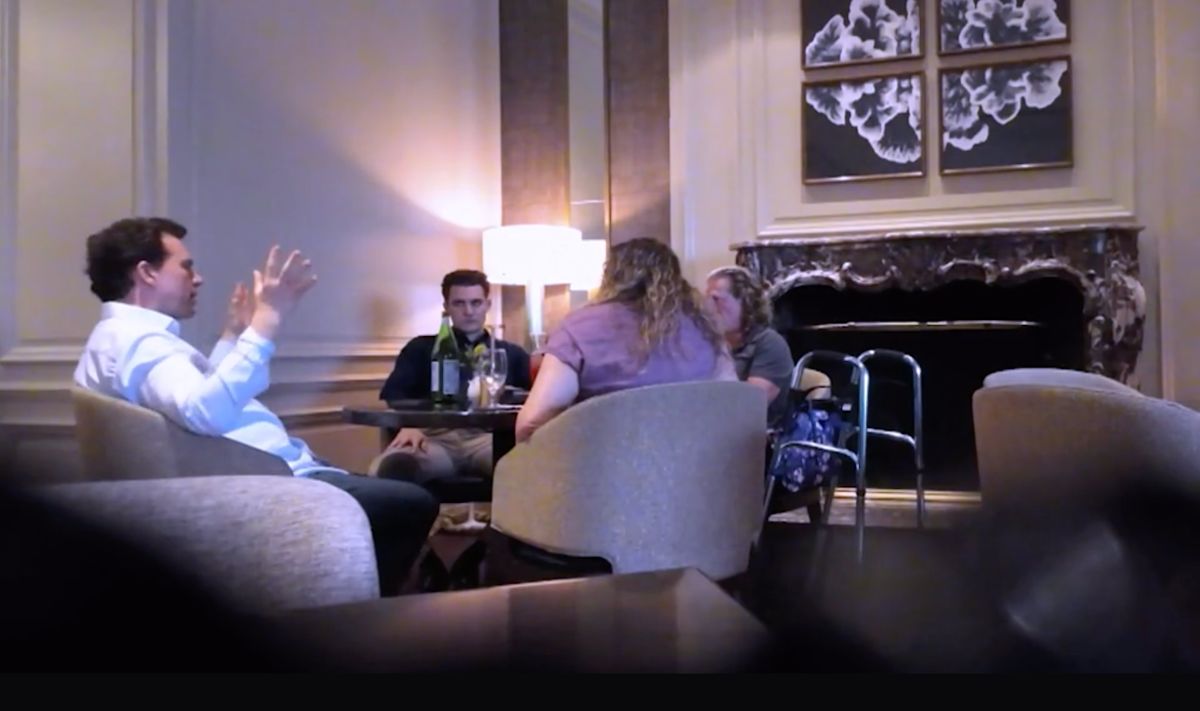
The mechanics of this burgeoning trade were laid bare during a mid-August rendezvous at a luxury Ritz-Carlton lounge in Tysons Corner, Virginia. There, political provocateurs and lobbyists Jack Burkman and Jacob Wohl met with Ammon Covino, a convicted felon, and his wife Crystal. The operatives pitched their specialized services, assuring the couple that securing relief from President Donald Trump required an aggressive, unconventional strategy tailored to the current administration's dynamics.
Unbeknownst to the two lobbyists, the encounter was not an ordinary business meeting. Covino had agreed to cooperate with an investigation by CBS News' "60 Minutes," which deployed hidden recording devices to document how modern pardon brokers operate behind closed doors. The footage captured the brazen promises and transactional nature that increasingly define executive clemency appeals.
During the discussion, Burkman outlined a strategy centered on exerting relentless pressure on the president from multiple angles to compel executive action. Promising that contacts and persistent energy were vastly more effective than standard bureaucratic procedures, Burkman and Wohl proposed a $300,000 fee. In exchange, they assured Covino that a full presidential pardon could be delivered as early as October.
Covino sought relief after serving nearly two years in federal custody for unlawfully transporting a stingray and a shark across state boundaries in connection with his aquarium enterprise. Although he had previously submitted a formal pardon petition through the Justice Department during the Biden administration, his request was summarily rejected by Trump in July as part of a sweeping initiative to clear out pending clemency backlogs.
The Trump administration's handling of executive clemency has marked a dramatic departure from standard protocol over the past 18 months. Immediately upon entering office, the president granted clemency, commutations, or dismissed prosecutions for more than 1,500 individuals charged or convicted in connection with the January 6, 2021, assault on the U.S. Capitol.
In the months following the initial wave of January 6 actions, dozens of additional clemency grants were awarded to white-collar offenders, many of whom possessed significant wealth or deep political connections. This pattern has reinforced the perception among applicants that formal bureaucratic procedures have been superseded by private networks and direct access.
While the presidential pardon power has generated controversy across multiple administrations, the current environment represents a sharp structural shift. Historically, executive clemency has sparked fierce debate, such as Gerald Ford's pardon of Richard Nixon, Jimmy Carter's general amnesty for Vietnam War draft evaders, and Bill Clinton's final-day grant to fugitive financier Marc Rich following substantial donations by his spouse to Clinton's library foundation.
Scrutiny over the clemency authority also intensified in December 2024, when President Joe Biden issued late-term pardons to various allies, donors, and family members. Among them were a broad grant for his son, Hunter Biden—who faced federal gun charges and had pleaded guilty to tax violations—as well as a preemptive pardon granted to former medical adviser Dr. Anthony Fauci.
Nevertheless, legal observers, defense attorneys, and prosecutors maintain that the present environment is unprecedented in scale. The pardon system has evolved into an unruly ecosystem dominated by politically aligned intermediaries, where long-standing administrative procedures and assessments of genuine remorse have been fundamentally displaced.
Under the traditional framework, clemency petitions were systematically evaluated by more than two dozen career attorneys within the Department of Justice. These legal professionals thoroughly vetted candidates by reviewing their rehabilitation, post-conviction conduct, and demonstrated repentance before submitting formal recommendations to the White House.
Today, that established institutional pipeline has been largely bypassed. A CBS News analysis of Justice Department records revealed that approximately 70 percent of Trump's second-term clemency decisions did not flow through the standard DOJ evaluation framework. When factoring in the mass relief provided to January 6 defendants, that figure climbs to an overwhelming 92 percent.
In place of career civil servants, a network of brokers has stepped in, leveraging personal ties to the White House, engaging prominent conservative influencers, and tapping close associates of the president. Because personal access has become the ultimate currency in securing relief, some brokers are charging prospective clients fees as high as $3 million for their lobbying efforts.
The commodification of the pardon process has alarmed constitutional scholars and legal advocates. Mark Osler, a law professor at the University of St. Thomas in Minnesota who directs a pro bono clemency legal clinic, warned that a constitutional relief mechanism designed to be universally accessible and free of charge is being warped into a pay-to-play enterprise.
Osler noted that regular applicants now feel compelled to secure astronomical sums to hire influential intermediaries who can reach the president at properties like Mar-a-Lago or lobby senior White House staff. This dynamic risks transforming executive mercy from an equitable judicial safety valve into a privilege reserved exclusively for those with immense wealth and political influence.


(0)