
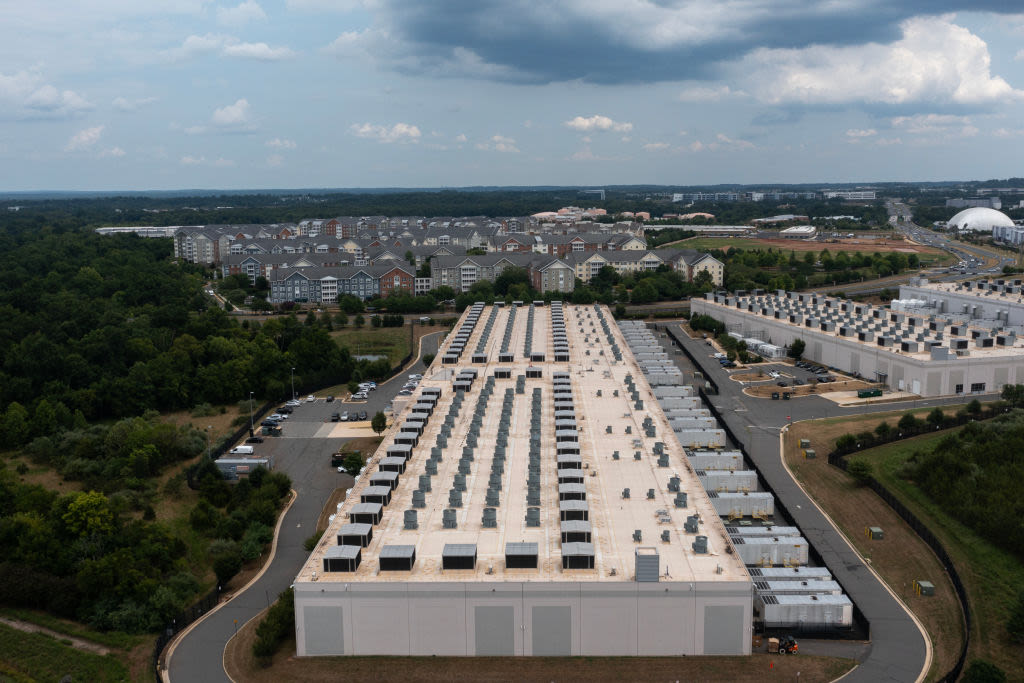
Voters across 18 Ohio municipalities and townships are preparing to cast their ballots on local measures that could halt or severely restrict the construction of massive data centers in their communities. The wave of citizen-led initiatives reflects mounting grassroots resistance against the rapid expansion of energy-intensive technology infrastructure across the Buckeye State.
The widespread push comes as Ohio cements its position as a major hub for computing infrastructure, currently ranking fourth in the nation for operational data centers, according to an analysis published by the Pew Research Center. Tech corporations and commercial developers are eager to construct dozens of additional facilities throughout the region, but their aggressive expansion plans are running directly into local opposition fueled by anxieties over rising electricity rates, environmental disruption, and the rapid rise of artificial intelligence.
Local organizers faced a strict procedural timeline, as the statutory deadline for submitting municipal charter amendment petitions to city councils ahead of the Nov. 3 ballot passed on Sept. 4. Under Ohio law governing charter municipalities, registered electors hold the right to submit charter petitions at any time; however, if an upcoming regular election falls outside the window of 60 to 120 days from filing, the measures must instead be presented in a standalone special election.
Among the 18 communities heading to the polls, nine municipalities have advanced measures that set a concrete threshold against high-voltage computing facilities. Petitions filed in Conneaut, Defiance, Granville, Oregon, Pataskala, Piqua, Sunbury, Trenton, and Upper Sandusky would enact bans on any data center drawing in excess of 25 megawatts of electrical power per month.
These nine local campaigns mirror a broader, unified statewide strategy initiated by the advocacy group Conserve Ohio. The organization had originally sought to place a 25-megawatt cap on the statewide ballot as a constitutional amendment, but shifted its focus toward coordinating municipal-level bans after failing to meet the signature collection cutoff in July. Conserve Ohio now plans to target the 2027 statewide ballot while working to enact local ordinances directly at the township and city levels.
According to statements from Conserve Ohio, the coalition remains focused on mobilizing neighborhood groups across the state to secure enforceable caps and restructure municipal governance so that local decision-making remains in the hands of the electorate. The rapid spread of these measures highlights how shared public frustrations have transformed into coordinated legislative pushes across diverse jurisdictions.
The scale of local pushback corresponds directly to industry interest. Of the 18 jurisdictions preparing to vote on data center regulations, 14 have already received formal development applications or preliminary site proposals from technology firms and commercial builders seeking utility capacity and land.
In the Miami County city of Piqua, the fight over data infrastructure has triggered an intense political clash following Meta’s proposed development of a massive facility requiring roughly 1,400 megawatts of electricity. Local petition organizer Alisha Lange helped lead the local ballot movement after previous experiences with industrial developments left her disillusioned with traditional civic channels.
Lange noted that her political mobilization began in 2023 after a battery facility sanctioned by the city resulted in persistent health issues for nearby residents following battery burning. Frustrated by unhelpful private meetings with regional elected officials, including U.S. Rep. Mike Carey, Lange and fellow organizers turned to direct democracy mechanisms to block the tech development.
In response to the Meta proposal, Piqua residents gathered sufficient signatures to trigger a recall effort against the city's mayor and two sitting city commissioners. In addition, petitioners filed measures to align the city's recall signature rules with state requirements and invalidate an existing municipal contract arranged to supply electric power to the proposed site.
Public sentiment in Piqua has rapidly escalated beyond energy caps. Organizers found during signature gathering that many residents favored prohibiting data centers altogether rather than merely limiting power consumption. That response led to a separate petition seeking an outright ban on data centers, which has garnered enough support to trigger a future special election.
Other municipalities are experimenting with customized regulatory limits designed to fit their specific power grid constraints. In Urbana, electors will decide on a localized charter amendment establishing a significantly lower cap, prohibiting any computing facilities that exceed 7.5 megawatts of power consumption.
Meanwhile, the city of Hubbard stands alone this November as the only Ohio municipality where residents will vote on a complete, blanket prohibition against all data center developments, bypassing power usage thresholds entirely.
In Franklin County's Pleasant Township, resident Jen Belt joined a related grassroots movement near Grove City, where she lives roughly two miles from a proposed data center site. The local petition drive in that area seeks to introduce mandatory community consent requirements for any new heavy industrial project proposed within the jurisdiction, not just computing facilities.
Collectively, the dozens of local ballot questions illustrate a profound shift in how Ohio residents are responding to massive industrial and utility expansions. For activists like Lange, the petition drives have fostered unexpected solidarity, turning shared community anxieties into an organized electoral challenge against rapid technological growth.








(0)