
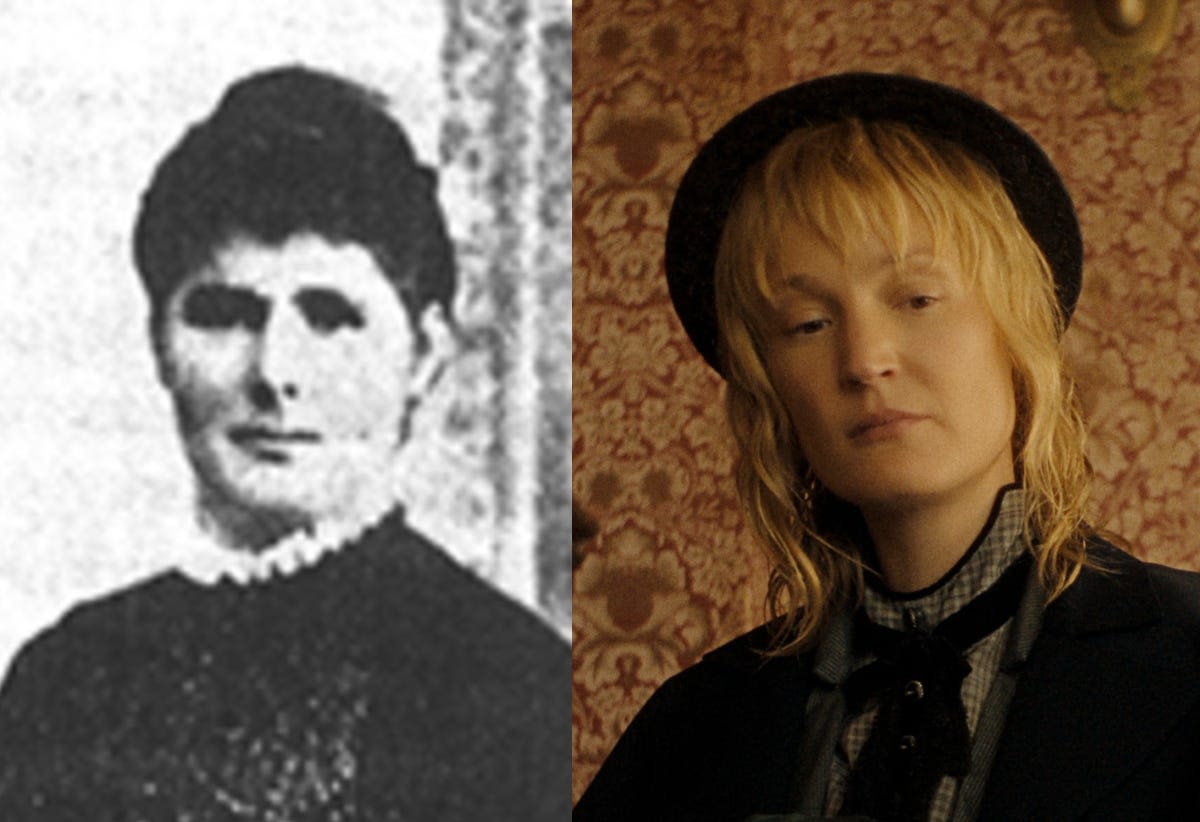
The enduring fascination surrounding the 1892 Fall River hatchet slayings has once again returned to the cultural spotlight with the trailer release for Ryan Murphy’s Netflix series, "Monster: The Lizzie Borden Story." As the dramatization prepares to explore the notorious double homicide of Andrew and Abby Borden, renewed attention is focusing on the primary domestic servant inside the Second Street home: Bridget Sullivan.
In the upcoming television adaptation, European actor Vicky Krieps portrays Sullivan, bringing the key historical witness—and occasional subject of accomplice theories—back into public discourse. While Krieps plays the role with a noticeable German accent despite Sullivan being an Irish immigrant, the production once again raises longstanding questions about how closely modern television dramatizations adhere to the established historical record of 1890s Massachusetts.
Understanding the real Bridget Sullivan requires looking past sensationalized television tropes to examine the documented facts surrounding her life, her difficult position in the Borden household, and her actions on the morning of August 4, 1892. Records indicate that Sullivan was an immigrant from Ireland who joined the Borden residence in 1889, tasked with handling relatively light domestic chores within the family's Second Street property in Fall River.
Throughout her tenure with the family, Sullivan was positioned in the middle of severe domestic dysfunction. The household was marked by persistent, palpable friction between the two adult Borden sisters, Emma and Lizzie, and their stepmother, Abby. The toxic domestic atmosphere proved difficult for the servant to navigate, leading her to reconsider her position on multiple occasions.
According to historical research presented by Michael Martins and Dennis Binette in their notable Fall River historical volume, "Parallel Lives," Sullivan repeatedly tried to quit her job with the Bordens. Her attempts to leave were consistently thwarted when the family persuaded her to remain, with Abby Borden going so far as to raise Sullivan's wages to convince her not to depart the tense residence.
The depth of the internal family conflict was also captured in contemporary press accounts following the killings. In 1892, the Boston Post reported that Sullivan herself observed the stepmother's fraught relationship with the sisters, noting that Abby was essentially "too good for them and they did not like her."
Adding to the strained dynamic, Emma and Lizzie Borden rarely engaged in routine domestic housework and regularly refused to address the servant by her real name. Instead, both sisters customarily addressed Sullivan as "Maggie." While some historians and observers have suggested this practice demonstrated a lack of personal respect or regard for Sullivan, substituting domestic workers' names was a relatively common social convention among wealthier classes during that era.
The days immediately preceding the brutal killings were marked by physical illness within the residence. Several Borden household members suffered from severe gastrointestinal distress, widely believed to have stemmed from food-borne contamination brought on by intense summer heat combined with the family's insufficient refrigeration capabilities.
While enduring folklore has long claimed that the family fell ill from consuming rancid breakfast mutton, historical testimony reveals that household members were already experiencing sickness before the mutton was ever prepared or eaten. The pervasive illness did not spare the household staff, directly affecting Sullivan on the day Andrew and Abby Borden were murdered.
On the morning of August 4, 1892, Sullivan was overcome with sudden nausea after serving the family breakfast. According to her official testimony, she was forced to step outside into the yard to vomit shortly before 9 a.m. After taking several minutes to recover from the sickness, Sullivan returned to her daily responsibilities and began washing windows, placing her in close physical proximity to the home at the exact time the fatal attacks occurred.
In modern pop-culture retellings, one of the most persistent narratives revolves around an alleged romantic or sexual affair between Lizzie Borden and Sullivan. Some dramatized versions suggest that a secret lesbian relationship between the two women served as the primary catalyst or conspiracy that motivated the violent demise of Andrew and Abby Borden.
This speculative angle has surfaced repeatedly in popular media across several decades, serving as a central theme in Evan Hunter’s 1984 novel "Lizzie," the 2018 feature film "Lizzie" starring Chloe Sevigny, and the newest Netflix production featuring Krieps and co-star Ella Beatty as Lizzie. Despite its recurring presence in dramatic adaptations, archival research provides zero historical evidence to indicate Sullivan was a lesbian or that her connection to Lizzie extended beyond standard boundaries between servant and mistress.
Following the conclusion of the high-profile Lizzie Borden murder trial, Sullivan chose to distance herself from the city that brought her unwanted notoriety. She briefly journeyed back to Ireland before eventually returning to live in the United States, permanently choosing never to reside in Fall River again.
As contemporary audiences prepare to watch the latest television interpretation of the Borden murders, Sullivan's documented experiences remain a crucial historical anchor. While modern entertainment frequently reshapes historical figures to serve dramatic narratives, the surviving records reflect an immigrant domestic worker caught amid an extraordinary crime and an exceptionally troubled family.





(0)