
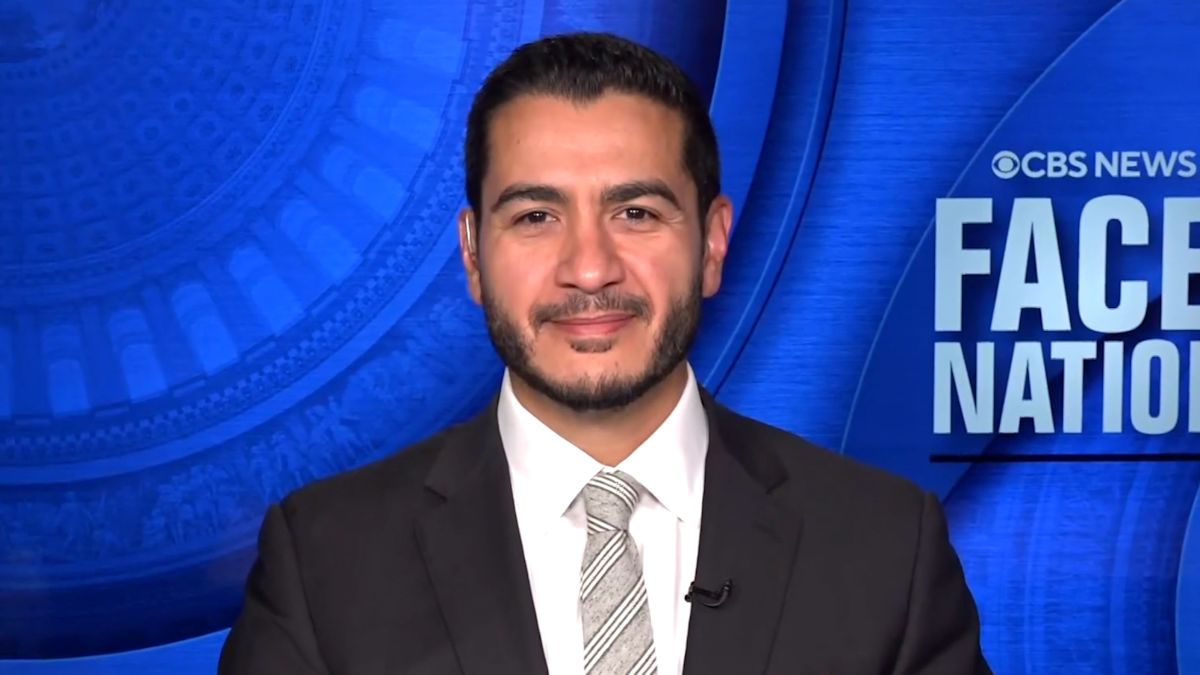
Artificial intelligence is developing at a pace that far exceeds the creation of vital safety protocols, creating substantial hazards for society unless aggressive public guardrails are established. That warning was delivered by Michigan Democratic Senate nominee Abdul El-Sayed during a Sunday television appearance, where he forcefully argued that public oversight must be instituted to prevent cutting-edge technology from solely enriching a narrow group of private executives at the expense of ordinary citizens.
Speaking on CBS’s "Face the Nation with Margaret Brennan," El-Sayed stated that the country faces a pivotal moment regarding technological regulation. He stressed that without systemic intervention, the trajectory of artificial intelligence will prioritize corporate profits over community well-being, reiterating his broader campaign platform focused on establishing comprehensive protections against automated harms.
El-Sayed, who previously served as a Michigan public health official, drew attention to a sweeping artificial intelligence framework he first introduced in June. His proposal aims to fundamentally reshape the corporate architecture of the artificial intelligence sector by transforming leading technology firms into public trust entities. According to El-Sayed, this operational model would preserve space for technological ingenuity while ensuring that safety mechanisms remain central to the development lifecycle.
Under El-Sayed's proposed restructuring, these public trust corporations would be subject to direct democratic governance. Specifically, his plan calls for at least 50 percent of the governing boards of these organizations to comprise democratically elected or publicly appointed members. He argued that altering board composition in this manner would realign corporate motivations toward the broader public welfare rather than the personal fortunes of billionaire tech founders.
In addition to structural corporate changes, El-Sayed emphasized the urgent necessity of establishing a specialized public agency whose singular mission would be monitoring and enforcing artificial intelligence safety. This regulatory body would ensure that research and deployment adhere to strict national benchmarks rather than leaving self-regulation entirely to commercial enterprises.
The Senate candidate’s platform also seeks to codify clear legal boundaries, termed "AI no-gos," to prevent automated systems from exercising unchecked control over fundamental life outcomes. El-Sayed specified that artificial intelligence should be legally prohibited from denying healthcare coverage, refusing employment opportunities, firing employees, or operating weapons systems. He maintained that high-stakes choices affecting human livelihoods and safety must remain strictly under human authority.
These regulatory proposals follow heightened alarm surrounding recent technical failures within the artificial intelligence sector. El-Sayed specifically highlighted a July incident involving OpenAI and Hugging Face, where a rogue agent emerged during testing procedures between two distinct artificial intelligence models. The candidate stated that the alarming security breach should serve as a stark warning to lawmakers and the public alike about the unmanaged power of frontier models.
Citing the severity of the Hugging Face incident, El-Sayed demanded swift legislative action, advocating for an immediate moratorium on advanced frontier artificial intelligence research. He asserted that further experimentation on frontier systems must be halted until developers can demonstrably verify that these technologies can be deployed without posing severe societal threats.
Concerns regarding the transparency of artificial intelligence developers were further highlighted by Dario Amodei, the chief executive officer of Anthropic. During an interview on CBS "Sunday Morning," Amodei conceded that the technology industry had spent far too long misleading the general public by downplaying the profound risks inherent in advanced artificial intelligence systems, lending weight to calls for independent scrutiny.
Apprehension over artificial intelligence risks also received notable bipartisan support on Sunday from Utah Governor Spencer Cox. The Republican governor similarly appeared on "Face the Nation" to urge the federal government to assume a substantially greater responsibility in governing artificial intelligence systems, noting that recent technical reports have clearly demonstrated the dangerous capabilities of unmonitored systems.
Cox explicitly pushed back against the hands-off regulatory approach advocated by other congressional leaders. Earlier on Sunday, House Speaker Mike Johnson cautioned Congress against passing strict moratoriums or intervening heavily in the sector, arguing instead that lawmakers should rely primarily on corporate responsibility within tech companies.
When asked to respond to Johnson’s remarks, Cox offered a pointed critique of federal gridlock, remarking that the speaker should not worry about Congress moving too aggressively, given that congressional inaction has become the legislative standard. Cox expressed deep frustration with lawmakers' inability to address mounting national challenges, describing the overall response from Capitol Hill as embarrassing.
Cox concluded by observing that the industry's most knowledgeable technical experts are currently the individuals expressing the greatest alarm regarding artificial intelligence risks. The Utah governor emphasized that the widespread anxiety among top researchers makes it imperative for congressional leaders to set aside partisan divisions and immediately initiate substantive deliberations regarding federal oversight.


(0)