
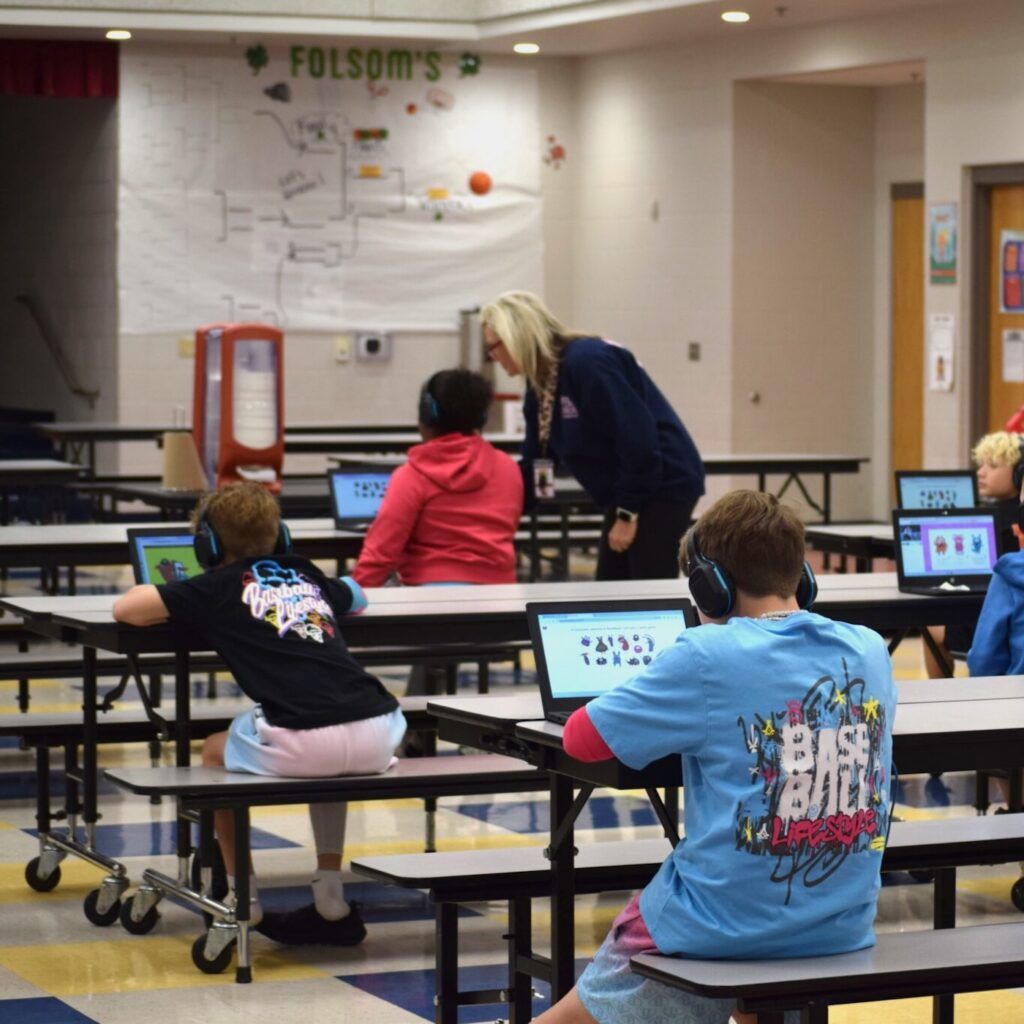
Following a state-mandated deadline on July 1, 2026, all traditional public school districts, community schools, and STEM academies across Ohio have officially adopted formal artificial intelligence policies. With the regulatory framework now established in law, educational leaders and teachers are shifting their focus toward the practical challenge of making these guidelines functional and effective within active classroom environments.
To assist local educational agencies, the Ohio Department of Education and Workforce developed a comprehensive model policy. This foundational guidance directs school districts to address critical operational areas, including permissible uses for both students and staff, data privacy safeguards, ethical considerations, the governance of third-party software tools, standard teacher practices, and the direct impact of technology on academic learning objectives and grading structures.
While these policy categories offer a structured starting point, educators confront a fundamental pedagogical dilemma. Meeting administrative requirements on paper does not necessarily resolve the day-to-day challenge of determining whether artificial intelligence tools are actively facilitating genuine student learning or simply automating the generation of schoolwork.
To bridge this operational gap, educational analysts are advocating for a structured "proof-of-learning" standard as districts enter the next phase of policy rollout. Such an assessment benchmark is designed to provide teachers with direct insight into a student’s cognitive effort and independent reasoning rather than judging automated end products in isolation.
Under this proposed evaluation framework, students would be required to submit a concise four-part explanation whenever artificial intelligence materially influences a graded academic assignment. The brief disclosure requires learners to outline what prompts or instructions they provided to the system, identify which parts of the generated response they modified or rejected, document the facts or assertions they independently verified, and articulate what skills or knowledge they can now demonstrate without technological assistance.
Proponents emphasize that the scope of this standard should remain strictly defined so as not to place undue burdens on everyday school tasks. Routine digital functions—such as standard spellcheck, automated word completion, and basic document formatting—would be entirely exempt from documentation requirements. Instead, disclosure would apply exclusively when technology materially influences core intellectual outputs, such as analytical reasoning, research, composition, computer programming, graphic design, or final evaluative conclusions.
This targeted approach aligns with the core principles already established in Ohio’s model policy, which explicitly instructs districts to evaluate how automated technologies affect curriculum benchmarks and academic assessments. Incorporating a reflective note transforms high-level policy guidance into an actionable classroom tool, enabling instructors to assess student judgment rather than relying solely on the superficial quality of a completed submission.
The necessity for such documentation stems from the unique characteristics of generative systems, which frequently produce sophisticated, highly articulate responses that mask underlying conceptual deficits. Because these programs generate fluent prose with ease, students can easily present an assignment that appears proficient while lacking the foundational knowledge required to spot fabricated citations, identify flawed premises, or catch shallow arguments.
Furthermore, relying heavily on automated AI detection software carries substantial operational drawbacks. Emphasizing detection often shifts the classroom dynamic into an adversarial contest centered on technological concealment and surveillance. In contrast, evaluating a student’s documented choices refocuses the educational process on authentic intellectual engagement and transparent methodology.
The practical value of this approach extends across diverse academic disciplines. In a history course, for example, a student might document that an automated tool suggested three underlying causes for a historical event, but explain that one was omitted after cross-referencing assigned primary texts.
Similarly, in computer science courses, a student could record how generated code failed to handle a specific edge case and detail the manual adjustments made to correct the program. In career-technical and vocational education, a student could illustrate how an automated procedural outline was adjusted to comply with official safety guidelines or machinery manuals, providing tangible evidence of critical thinking through real-world problem-solving.
This education-focused framework emerges at a time when broader technological oversight in the state remains constrained. Reporting from the Ohio Capital Journal noted that wider legislative efforts to regulate artificial intelligence across Ohio have stalled due to ongoing uncertainty surrounding state-level enforcement capabilities.
Despite that broader legislative standstill, the state's K-12 education sector has moved forward decisively. With the state legislature setting an explicit compliance deadline, the Department of Education and Workforce supplying foundational guidelines, and local school boards holding implementation authority, the public education system has become a practical arena for establishing clear standards of human accountability.
Beyond immediate classroom benefits, developing transparent AI evaluation standards directly supports workforce readiness. Modern employers increasingly expect workers to utilize modern automated tools, but they continue to depend on individuals who can actively spot errors, safeguard proprietary data, recognize when human expertise is indispensable, and take full responsibility for final deliverables.
By regularly practicing the documentation of their technological decisions, students will acquire competencies that extend far beyond basic prompt drafting. Through proof-of-learning practices, Ohio classrooms can equip learners with the higher-level analytical capability to critically evaluate, verify, and responsibly supervise intelligent systems.





(0)