
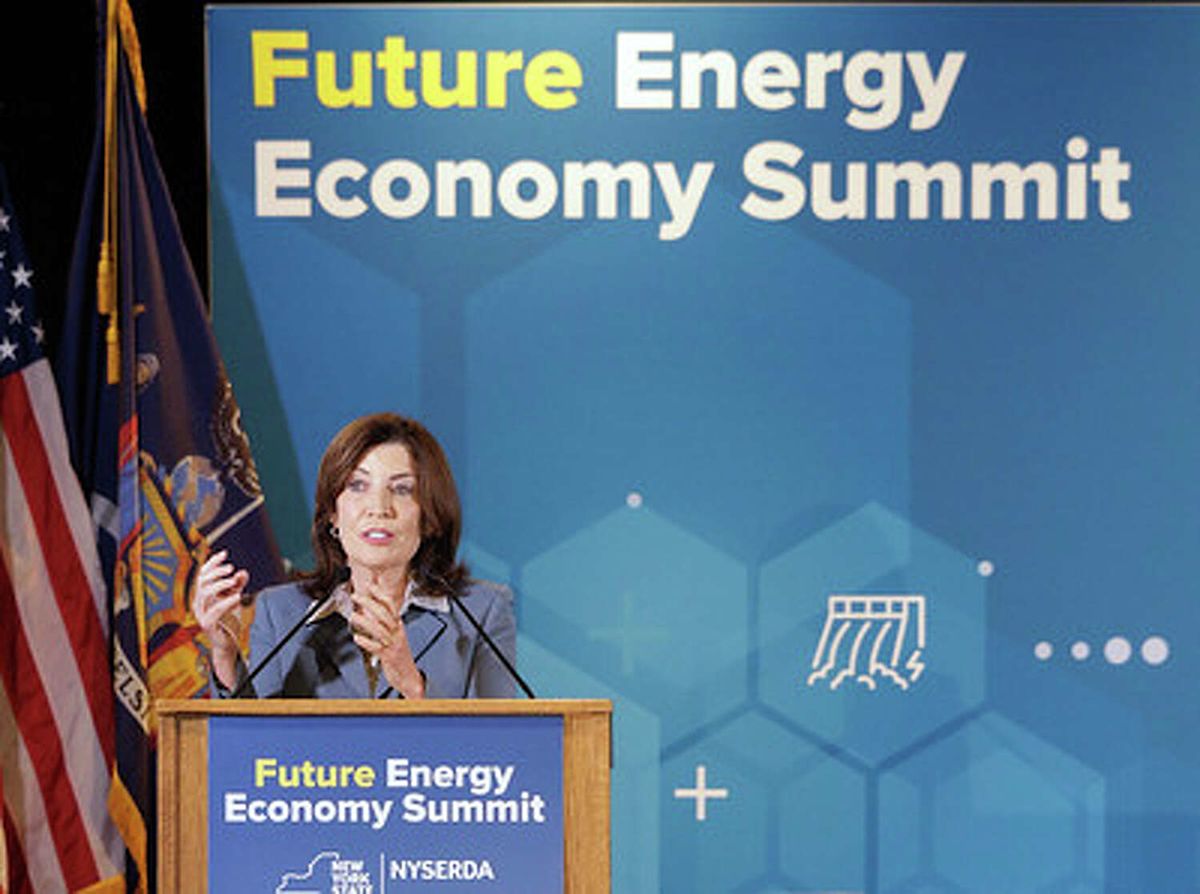
More than eight million New York households are slated to receive financial relief this month as the state prepares to distribute direct energy rebate checks of up to $200. The payments, authorized under the state budget, represent the second consecutive year that Gov. Kathy Hochul’s administration has dispatched taxpayer-funded relief checks directly to residents facing heightened living expenses.
The $1 billion relief initiative will begin mailing checks on September 21, with distributions continuing through December. State officials structured the program to assist low- and middle-income residents grappling with elevated utility bills and high fuel prices, targeting households based on income tax filings from the 2024 tax year.
Under the tiered distribution plan, married couples filing jointly with an annual income under $150,000 will receive the maximum check of $200. Joint filers earning between $150,000 and $300,000 are set to receive $150, while individual tax filers with earnings under $150,000 will be sent a payment of $100.
To qualify for the rebates, recipients must have filed their 2024 state income tax returns on time, maintained full-time New York residency throughout that tax year, met the established income caps, and not been claimed as a dependent on another filer's return. State officials emphasized that eligible residents do not need to submit an application, as checks will be automatically issued through the mail.
Governor Hochul framed the rebates as an essential component of her administration's affordability agenda, placing blame on federal lawmakers while arguing that direct financial interventions are critical to easing consumer strain. She stressed that the administration's priority is helping families manage escalating bills at home and higher prices at fuel stations across the state.
In defending the program, the governor’s office pointed to acute pressures in the energy and transportation markets, specifically citing local gasoline prices averaging roughly $4.35 per gallon. Administration officials attributed this cost to a 45 percent surge linked to the ongoing conflict in Iran, in addition to wider upward pressure on natural gas and power grids.
Amanda Hiller, commissioner of the New York State Department of Taxation and Finance, endorsed the distribution, describing the power checks as a practical and necessary tool to support working New Yorkers navigating complex economic headwinds. Her department is tasked with managing the logistics and mailing of the millions of individual checks over the coming months.
The newly announced disbursements build on prior state relief efforts. Since 2021, New York has directed roughly $7.6 billion toward utility assistance programs and related customer relief. Just last year, the state sent out "inflation refund checks" of up to $400 to a similar demographic of income-qualified residents during the autumn months.
The rebate program comes against the backdrop of significant energy cost disparities between New York and the rest of the country. A report released in April by the Albany-based Empire Center for Public Policy, drawing on data from the federal Energy Information Administration, highlighted that the state's average residential electricity rate reached approximately 29.99 cents per kilowatt hour.
According to the Empire Center’s analysis, that figure is roughly 70 percent higher than the nationwide residential average of 17.6 cents per kilowatt hour. The findings also revealed that New York power consumers pay about 50 percent more for electricity than neighboring residents in Pennsylvania, and nearly twice the rates recorded in states such as Texas and Florida.
Despite the administration's stated intent to offer immediate financial relief, the timing and structure of the checks have drawn sharp scrutiny from political opponents and critics within state government. Skeptics have questioned the release of state funds just weeks ahead of the general election, arguing the one-time disbursements serve short-term political goals rather than addressing structural economic problems.
Assembly Minority Leader Ed Ra criticized the administration for what he characterized as a delayed and insufficient response to long-term energy inflation. Ra argued that sending $200 checks less than two months before voters head to the polls does little to offset utility costs that far exceed national norms, contending that the state has failed to present viable solutions for energy affordability or electrical grid stability.
While Republican leaders voiced opposition to the timing, many GOP lawmakers in the state Legislature did support the rebate funding when it was included in broader legislative proposals aimed at tackling high electricity rates earlier in the year. Nonetheless, legislative critics continue to insist that broader structural reforms are needed to rein in energy costs permanently.
Criticism of the state's reliance on one-off rebate distributions has also emerged from within Democratic ranks. Lieutenant Governor Antonio Delgado, who previously launched a primary challenge against Hochul before exiting the race earlier this year, spoke out against similar payments last year, labeling them political theater that avoids the substantial investments required in areas such as childcare, healthcare, and affordable housing.
In response to critics, the governor’s office maintained that the enacted fiscal year 2027 state budget was specifically designed to balance the scales for everyday residents against major utility corporations. As New York continues to navigate its transition toward ambitious zero-emission mandates, the debate over how to balance environmental targets with affordable utility rates remains a central issue in state politics.








(0)