
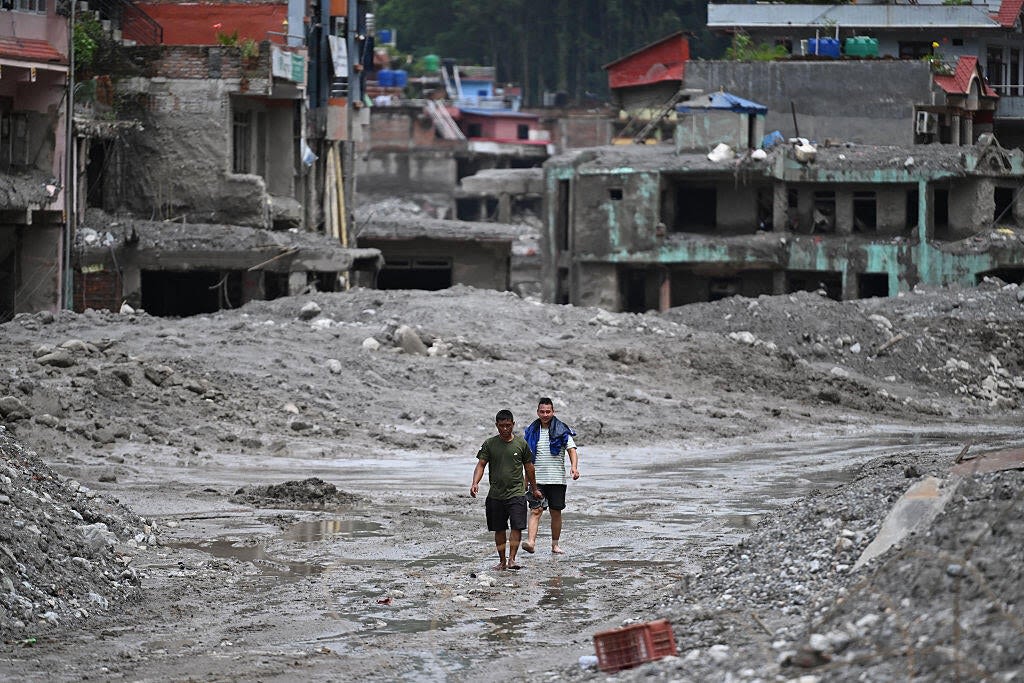
In a tragic turn of events, Nepal is bracing for potential fresh flooding as the death toll from the recent catastrophic floods has surged past 900. The situation is dire, with 4,247 still reported missing, and Chinese authorities reporting 16 deaths and 546 missing on their side of the border. The disaster, which began with a glacial collapse high in the Himalayas, has left a trail of devastation across the region.
The Nepalese disaster agency has issued a high alert, warning residents in flood-affected districts to remain vigilant. Water levels in the Bhotekoshi River have risen dramatically, prompting the alert. Early Sunday morning, authorities sent out urgent warnings to the public via their mobile phones, urging them to stay safe and be prepared for the possibility of further flooding.
The flood survivors in Nepal are grappling with the aftermath of the disaster. In the hard-hit district of Dhading, residents have begun the arduous task of returning to their destroyed homes to search for any belongings that may have survived. Sharmila Tamang, a Dhading resident, expressed the heart-wrenching reality of the situation, "Everything is finished. Nothing is left. Not even our home."
The floodwaters have caused widespread destruction, including the severe damage to a key power plant that serves over 20,000 people across four districts. Workers at the plant have begun inspecting the facilities to assess the extent of the damage. The situation has prompted a global response, with Nepal's foreign minister calling for a coordinated international effort to address the impact of climate change on the region.
In a separate development, the U.S. State Department has confirmed that there are currently 85 Americans unaccounted for in Nepal, with nine having been safely evacuated. Tommy Pigott, a spokesperson for the State Department, said that the department is actively working with the Nepalese government to provide assistance to those affected and is coordinating efforts to ensure the safety of U.S. citizens in the disaster area.
The missing also include hundreds of people from over a dozen countries who were in the region to work, visit the mountains, or make a pilgrimage to a sacred peak. On Sunday, Chinese state media reported that 261 foreigners are missing in Tibet, including over a hundred Nepalis and others from around the world.
The flash floods began on Wednesday after a glacial collapse in the Himalayan region. Scientists who analyzed satellite images said the bedrock underneath a glacier in the high-altitude region had collapsed, taking part of the glacier with it. The rockfall, which registered as magnitude 5.2, then sent a torrent of water cascading through the valleys below, sweeping away buildings, bridges, and earth in Tibet and Nepal.
As the situation continues to evolve, the Nepalese government and international agencies are working tirelessly to provide relief and support to those affected. The disaster has highlighted the urgent need for a global response to the impacts of climate change, with nations around the world called upon to take action to mitigate the effects of such natural disasters.







(0)