
Across urban and regional landscapes throughout Iowa, a transformative community movement is taking hold as developers and local leaders look to the state's architectural past to address pressing modern housing needs. Rather than allowing aging facilities to sit vacant or face demolition, several landmark properties are undergoing extensive adaptive reuse. This growing strategy seeks to revitalize underutilized infrastructure by converting historic properties into much-needed affordable residential living spaces.
The diverse array of properties currently undergoing transformation reflects the rich cultural, educational, and civic heritage of the Hawkeye State. Among the notable projects is a 102-year-old Catholic church and parish school building in Waterloo, which is being carefully redesigned for residential living. Meanwhile, in Des Moines, a historic former U.S. Army post dating back nearly 130 years is being repurposed to accommodate residents seeking accessible and affordable options.
Just blocks away from the Iowa State Capitol, another significant conversion effort is breathing new life into a 69-year-old former Lutheran church building. Although these landmark facilities were constructed during different eras and originally served vastly distinct community functions—ranging from military operations and religious worship to parochial education—they now share a common modern objective: substantially expanding Iowa's statewide inventory of affordable housing.
The broader push toward historic preservation and residential conversion is closely tied to the unique structural realities of the state's existing real estate stock. According to research and documentation compiled by the Iowa Finance Authority, Iowa has the eighth-oldest housing stock in the entire United States. The median construction year for residential buildings across the state is 1957, highlighting the mature age profile of its physical communities.
In addition to its aging residential neighborhoods, Iowa possesses a substantial supply of vacant, underused, and decommissioned non-residential structures. Over decades marked by shifting demographic patterns and institutional changes, many large civic, religious, and institutional complexes have fallen out of active use. Rather than letting these historic structures deteriorate, regional planners and property developers increasingly view them as ideal opportunities to address community housing demands.
By focusing on the restoration and strategic reuse of existing brick-and-mortar structures instead of relying exclusively on new ground-up construction, developers are embracing creative architectural solutions. This adaptive reuse approach enables builders to preserve the historical fabric of established neighborhoods while delivering modern, functional housing units. Utilizing existing foundations and frameworks provides a practical alternative to building on undeveloped land while honoring local history.
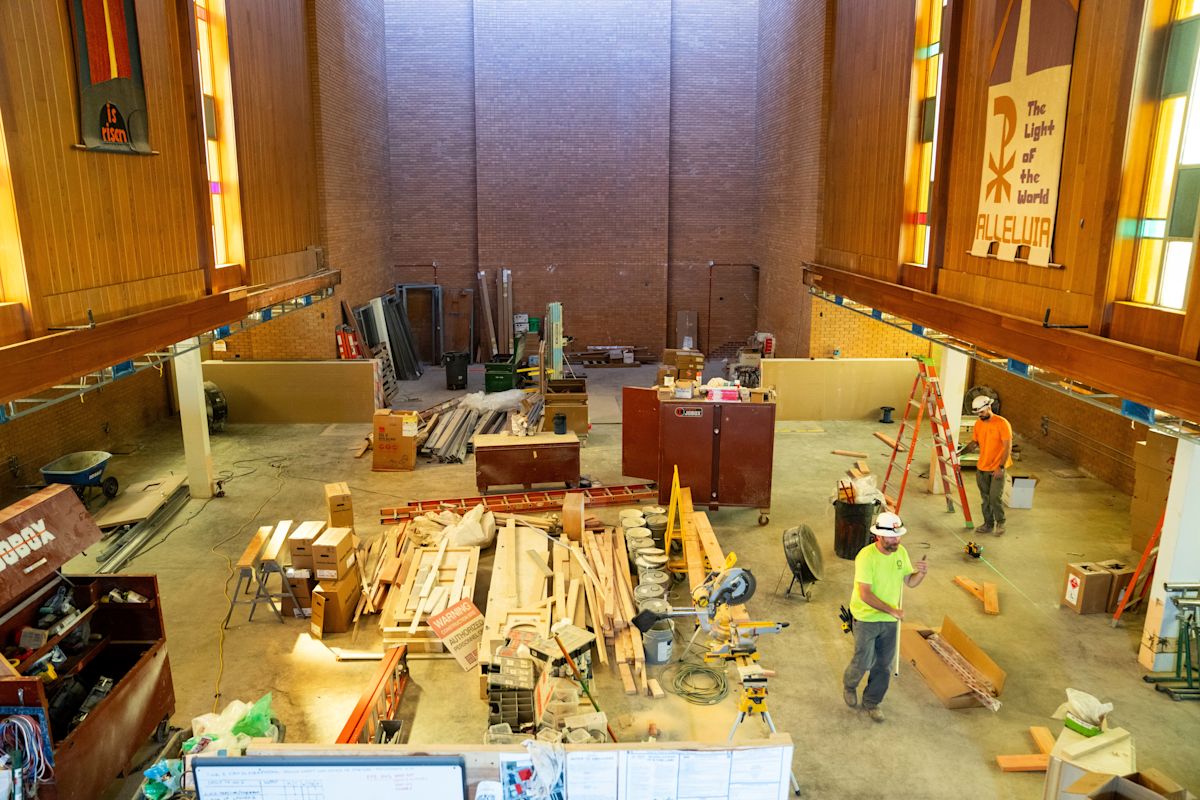
A prominent example of this adaptive redevelopment model is currently unfolding in Des Moines through an ambitious initiative organized by the nonprofit group Starts Right Here. The organization is actively engaged in transforming the historic site of the former Elim Christian Fellowship—the 69-year-old church property situated near the state capitol—into a specialized housing and learning complex designed to serve vulnerable community members.
Known as the "Stay" project, the development is designed to combine stable, affordable residential quarters with on-site educational support. The initiative is guided by Starts Right Here founder Will Keeps, who has overseen the building's physical transition. Keeps envisions the revamped facility as a secure environment where residents can establish personal stability while working toward brighter academic and professional futures.
A central objective of the Stay initiative is addressing the acute housing instability faced by at-risk youth in the Des Moines area. For young people navigating difficult socioeconomic transitions, securing reliable and budget-friendly shelter remains one of the greatest obstacles to achieving long-term independence. By embedding educational programming and community resources within a secure housing environment, the project establishes an essential support network.
On-site construction progress documented in late August 2026 highlights the substantial structural work required to adapt the former church facility. Crews have been actively transforming the building's expansive institutional spaces, fellowship halls, and former gathering rooms into individual living quarters and modern educational areas designed to support personal development and collaborative learning.
Architectural renderings and ongoing construction milestones showcase how the former church structure is being systematically modernized. The construction teams are integrating updated interior amenities and residential layouts while preserving the mid-century character that has defined the site for nearly seven decades. The resulting facility is set to provide an essential community asset that honors its heritage while meeting modern social needs.
The coordinated housing initiatives taking shape in Des Moines and Waterloo illustrate how creative community planning can simultaneously resolve multiple civic priorities. Restoring historic buildings preserves local neighborhood identity and prevents urban blighting, while converting them into dedicated residences directly assists populations facing rising living costs across the state.
As property developers and community organizations continue to identify underutilized structures throughout Iowa, these historic conversions offer a replicable blueprint for sustainable urban renewal. By transforming century-old schools, historic military posts, and neighborhood churches into accessible residential spaces, Iowa demonstrates how the foundations of the past can provide lasting solutions for future generations.








(0)