
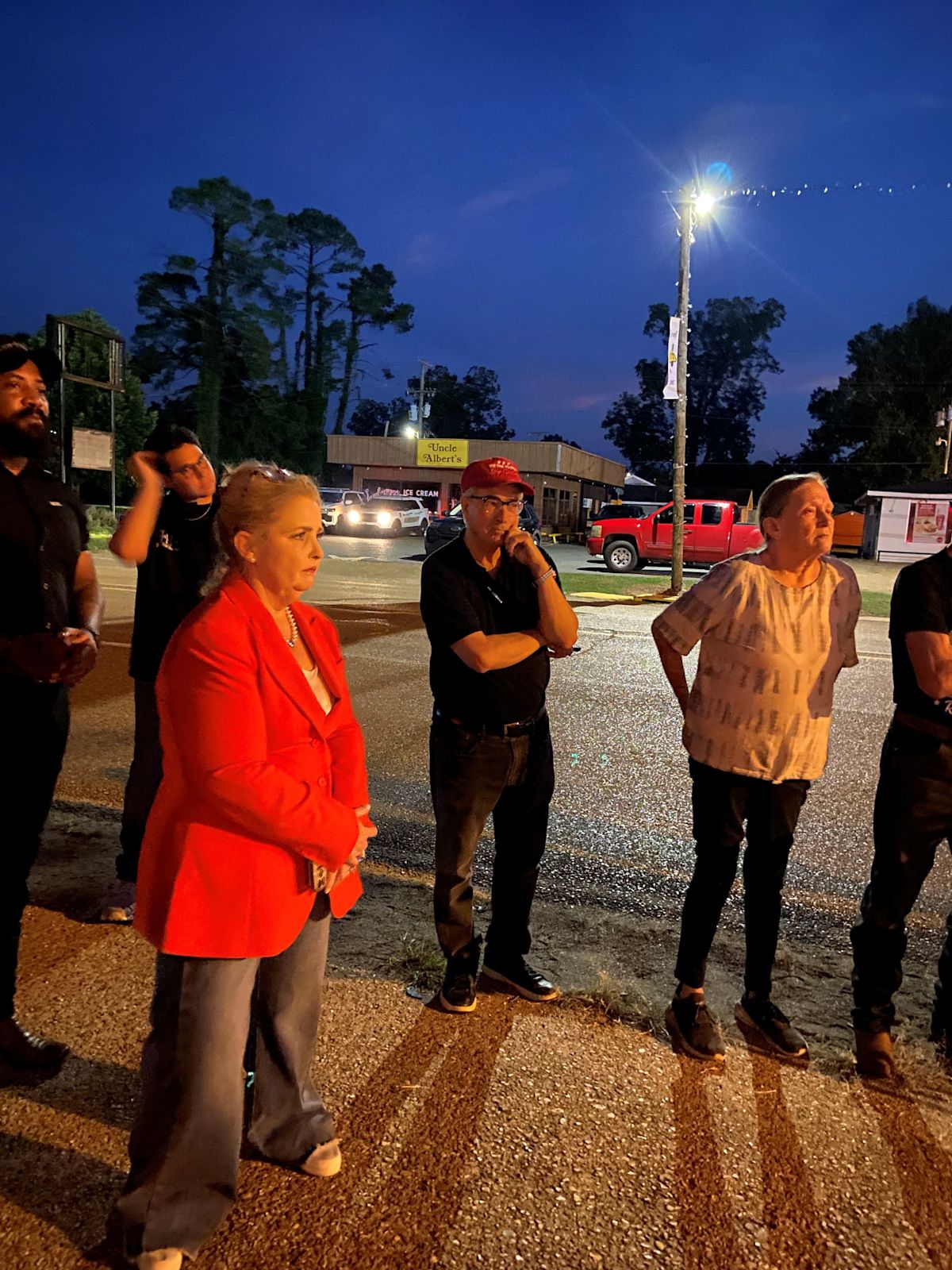
Grassroots skepticism surrounding the rapid expansion of artificial intelligence infrastructure reached Central Louisiana over the weekend, as national and local organizers gathered to protest the construction of a multibillion-dollar facility in Rapides Parish. Demonstrators voiced intense frustration over the perceived lack of community input in approving high-demand digital facilities, arguing that residents are bearing the resource burdens of a national tech boom without having meaningful decision-making authority.
The demonstration took place on a parking lot in Boyce as part of the "AI Data Center Revolt" tour, a national initiative organized by Humans First. Led by conservative activist and chair Amy Kremer, the group describes itself as a grassroots coalition advocating for an "America First" approach to national artificial intelligence policy. The traveling campaign originally launched in Dallas during a mini Republican convention, stopped in Austin, and made Boyce its second official tour destination before traveling toward a planned September 16 conclusion in Washington, D.C.
Addressing the gathered crowd alongside figures such as attorney Ed Tarpley, Kremer underscored that her movement does not oppose technological advancement or artificial intelligence as a concept. Instead, she argued that the pace and placement of major infrastructure projects are currently proceeding without the consent of the people living alongside them. She emphasized that communities must be empowered to decide for themselves whether they wish to host massive computing operations.
During her remarks, Kremer stressed that the foundations of modern artificial intelligence were built largely using domestic resources, including American data, geographic land, energy grids, and public tax dollars. Despite those contributions, she told the crowd that ordinary citizens have been completely sidelined regarding how the technology is deployed, warning that corporations and authorities are forcing expansive industrial projects into small municipalities without adequate public participation.
Rather than advocating for overarching state or federal moratoriums on technological construction, Kremer called for strict local governance and direct community oversight. She argued that true self-determination requires allowing local electorates to decide whether data hubs should be permitted, suggesting that voters should determine the issue by electing local leaders who align with the community's consensus on whether to permit or reject development.
The tour chose Boyce as a primary focal point due to the ongoing development of Data Forge 1, a massive $3.6 billion AI factory data center situated on former farmland just outside the town limits. The sprawling high-tech installation is being constructed by Applied Digital, a technology infrastructure company based in Dallas, Texas. The facility represents one of the largest private capital investments in the surrounding rural area.
Local scrutiny of Data Forge 1 has been building for several months following corporate and municipal outreach efforts. In June, representatives from Applied Digital, regional economic development organization Louisiana Central, and local utility Cleco held a public informational forum in Boyce to present operational details and tout the economic promise of the development. However, the initial community response was heavily characterized by skepticism and apprehension.
That wariness was on full display during Saturday's rally, where speakers raised pointed questions regarding the infrastructure and environmental demands of the new facility. A chief concern among area residents is the sheer volume of electrical energy required to run the computing center and how the local utility grid will manage that demand without negatively impacting everyday consumers.
Gary Musgrove, the president of Save My Louisiana, addressed the crowd to outline specific concerns regarding regional utility capacity. His organization was originally established in 2025 to oppose carbon capture and sequestration initiatives, but it has since shifted significant attention to large-scale data center developments due to unresolved property rights and utility infrastructure questions.
Musgrove highlighted that Cleco has contracted to supply 430 megawatts of electricity to the Data Forge 1 site. He pointed out that this single allocation represents approximately 25 percent of the utility company's entire electrical output and equals the power needed to supply roughly 250,000 residential homes. Musgrove openly questioned where the utility will secure such a substantial surplus of power without compromising the regional energy supply.
Community organizers also expressed frustration over what they described as a lack of transparency from corporate stakeholders. Musgrove stated that when citizens sought clarification during the June informational forum regarding how the massive power demands would be met, corporate representatives declined to share operational specifics, citing proprietary business information.
Referencing public statements from political figures regarding artificial intelligence development, Musgrove noted that while former President Donald Trump has warned that towns rejecting data centers risk missing out on vital economic growth, he also emphasized that such hubs must generate their own power. Musgrove questioned whether the Boyce site would ultimately resort to utilizing an estimated 196 on-site generators to meet its 430-megawatt requirement, raising concerns about potential noise and environmental disturbances for nearby households.
In addition to energy concerns, land rights and the potential use of eminent domain remain contentious subjects among local advocates. Although Musgrove acknowledged that expropriation has not occurred with the Data Forge 1 project to date, he warned that the need for expanded utility corridors, transmission lines, and supporting physical infrastructure could eventually lead to property disputes for neighboring landowners.
The rally drew interested observers and residents from across the parish border, including Dustin McAnn, a teacher and cattle rancher who resides in LaSalle Parish while working in Rapides Parish. The presence of regional attendees highlighted how the environmental, electrical, and economic ramifications of large-scale technology facilities often resonate across county lines into adjacent rural areas.
As the Humans First tour heads toward its final destination on Capitol Hill, the controversy surrounding Data Forge 1 in Boyce reflects a broader national conversation. Across the country, rural and suburban communities are increasingly balancing the economic allure of high-tech investments against profound concerns over energy reliability, environmental impact, and local self-governance.






(0)