
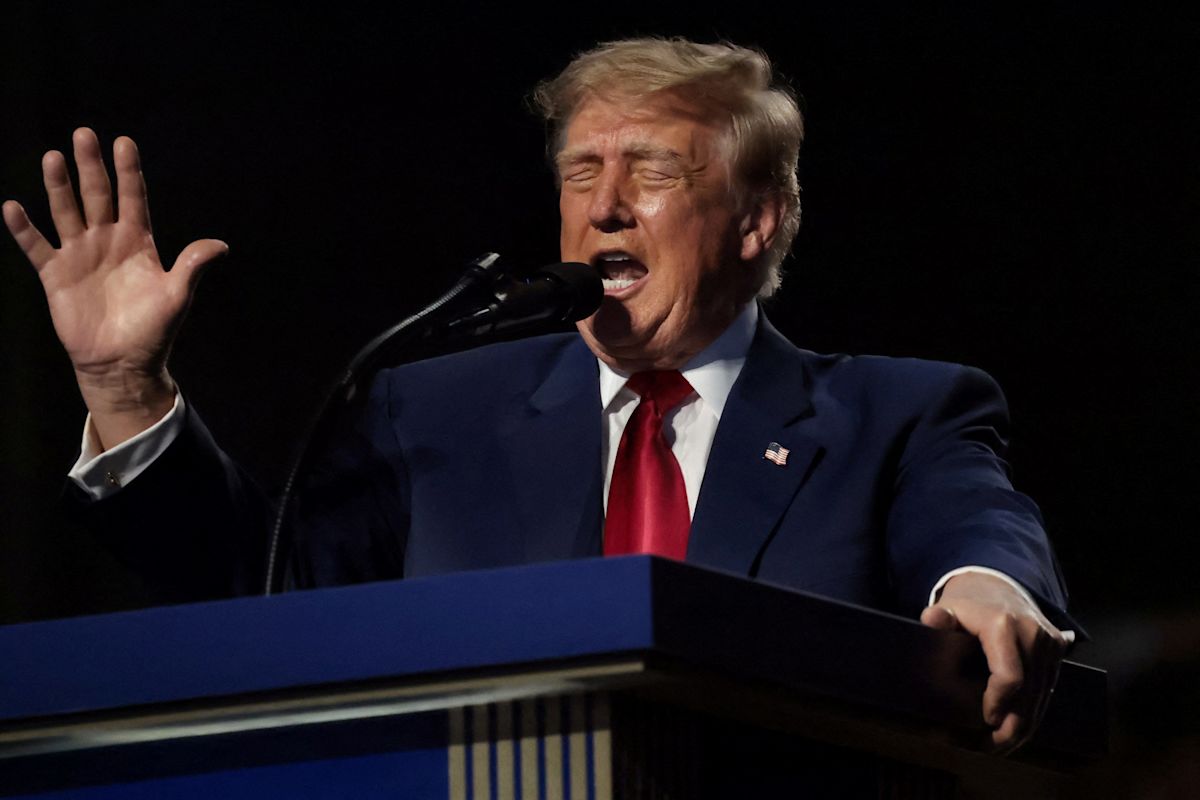
President Donald Trump has introduced a massive direct-payment proposal on the campaign trail, pledging that every adult citizen across the United States will receive a $5,000 dividend check if the Republican Party secures majorities in both the House of Representatives and the Senate during the upcoming midterm elections on November 3. The announcement has immediately drawn attention to both the immense fiscal implications of such a plan and the practical pathways required to execute it.
The proposal was first unveiled during a campaign appearance in Dallas on September 9, followed promptly by an official White House press release the next day outlining the administration's rationale. According to official statements, the funds for this nationwide distribution would be generated through general economic strength, fueled by what the administration describes as trillions of dollars in newly unlocked private investment alongside a sweeping initiative aimed at reducing wasteful government expenditures.
Despite the administration's enthusiastic framing, policy analysts and fiscal watchdogs have highlighted the staggering cost associated with issuing universal cash disbursements of this magnitude. Budget experts project that distributing $5,000 checks to every adult in the country would carry an estimated overall price tag of roughly $1.2 trillion.
An expenditure of $1.2 trillion represents a historic outlay for a single round of direct checks, raising severe warnings regarding its macroeconomic consequences. Nonpartisan analysts point out that injecting such a vast sum into the financial system without dedicated offsets could significantly exacerbate national debt levels while reigniting broader inflationary pressures throughout the economy.
The scale of the proposed distribution is underscored by data from the Committee for a Responsible Federal Budget, which found that the $1.2 trillion cost would exceed the combined total of all three rounds of emergency stimulus payments authorized during the COVID-19 pandemic. Furthermore, the organization noted that the expenditure surpasses the projected costs of the administration's flagship "One Big Beautiful Bill" legislative package for next year and is roughly 50 percent higher than the entire primary budget deficit forecast for 2027.
Beyond the sheer budgetary scale, enacting the proposed dividend faces substantial procedural and structural barriers. As with any broad federal disbursement, the president cannot distribute payments unilaterally; the measure would require formal congressional authorization, a legislative process that typically involves months of debate, negotiation, and partisan maneuvering even if Republicans capture both chambers of Capitol Hill.
Furthermore, any resulting legislation or executive implementation would almost certainly face rigorous judicial scrutiny. Legal scholars emphasize that sweeping spending directives often attract immediate challenges in federal court, raising the possibility of intervention by the Supreme Court before any funds could realistically reach everyday bank accounts.
Skepticism surrounding the current pledge is also driven by previous instances where direct financial promises failed to materialize. In early 2025, the administration raised the prospect of a $5,000 stimulus check funded entirely by internal government savings identified by the Elon Musk-led Department of Government Efficiency. However, those proposed payments never materialized, and the efficiency agency ceased operations earlier this year without delivering the promised relief.
A similar dynamic occurred in November 2025, when Trump promised $2,000 stimulus checks intended to offset financial strains caused by aggressive trade tariffs placed on international trading partners. That initiative collapsed after the Supreme Court ruled the sweeping tariff measures unconstitutional, effectively eliminating the revenue stream that was supposed to underwrite the stimulus checks.
Nonetheless, defenders of the administration point out that several specialized payout initiatives have successfully reached the public despite initial skepticism. In December 2025, active military personnel were issued $1,776 "Warrior Dividend" bonuses, demonstrating that the administration has managed to coordinate targeted cash disbursements under specific circumstances.
Although the president initially asserted that the military bonuses would be financed directly through foreign tariff revenue, the disbursements ultimately relied on domestic appropriations. The money was drawn from military housing allocations that had previously been authorized by lawmakers under the comprehensive One Big Beautiful Bill legislation.
The administration also achieved the rollout of the "Trump Accounts" initiative, a program designed to provide early investment capital for younger generations. Under this program, the federal government establishes accounts and deposits $1,000 for children born between 2025 and 2028, with official reports indicating that approximately six million eligible children had been enrolled as of July 6.
Despite these narrower successes, the proposed $5,000 universal midterm dividend represents an undertaking of vastly greater complexity and expense than previous programs. As the November 3 midterm elections draw closer, the promise stands as a central campaign issue, leaving voters and analysts to weigh the ambitious financial proposal against formidable constitutional, congressional, and fiscal realities.








(0)