
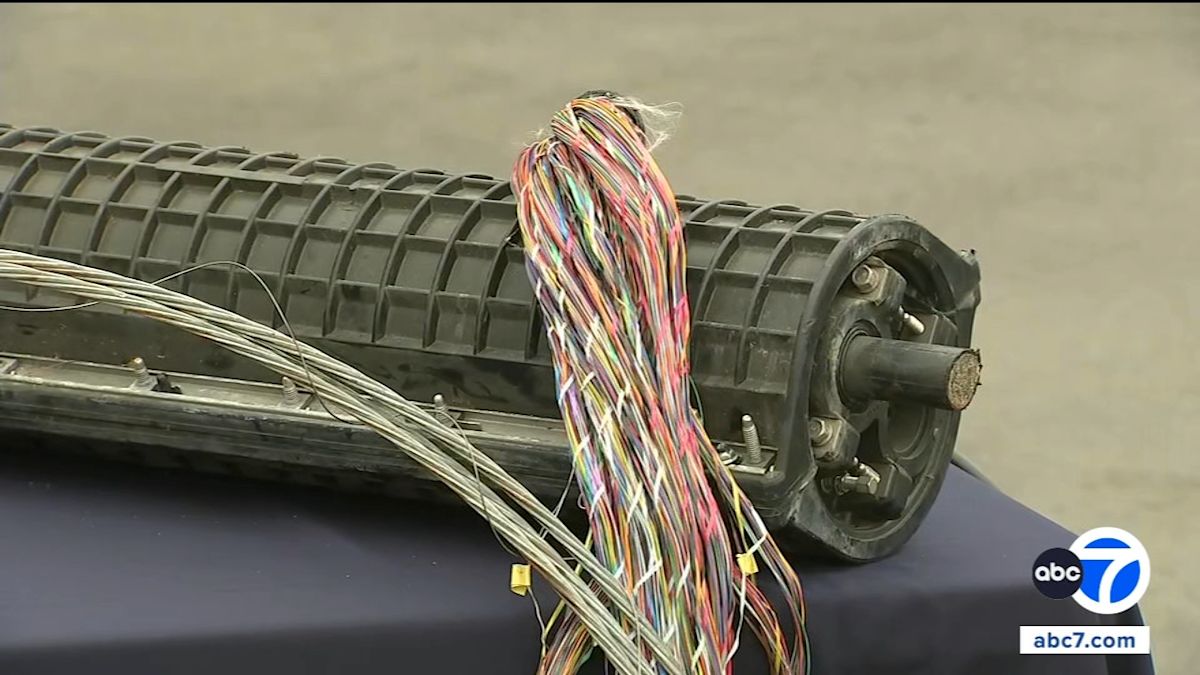
A unified coalition of municipal leaders, law enforcement officials, and business representatives is calling on California Governor Gavin Newsom to enact new legislation aimed at suppressing widespread metal and copper theft across the state. The appeal follows a wave of infrastructure thefts that have knocked out essential utility services and repeatedly left public roadways in the dark.
The urgency surrounding the legislative push has been underscored by newly disclosed utility records that illustrate the sheer magnitude of the crisis facing Southern California. According to public records obtained from the Los Angeles Department of Water and Power, criminal operations have stripped more than 27,000 feet of communications cable from the municipal utility system within the past year alone.
The sheer volume of stolen material represents approximately five continuous miles of essential wiring. If oriented vertically toward the sky, that length of cable would equal the standard cruising altitude of a commercial passenger jetliner. Laid horizontally along the ground, the missing utility lines would span the combined length of 90 standard football fields or roughly 165 Olympic-sized swimming pools placed end to end.
The recurring thefts have caused substantial disruption to daily life and civic infrastructure throughout Los Angeles and several other urban centers across California. By severing critical communications lines, theft crews have disrupted landline and cellular telephone services while disabling municipal electrical systems, leaving long stretches of streetlights entirely dark.
In response to the escalating damage, state lawmakers approved Assembly Bill 1941, a statutory measure designed to equip prosecutors and local police agencies with enhanced legal mechanisms to confront illicit metal scavenging rings. The legislation focuses on dismantling the structured networks that coordinate the removal and illicit distribution of critical public metals.
Under the framework established by AB 1941, state law would institute a specific criminal offense designated as "organized metal theft." This legal category directly targets individuals who conspire to extract municipal metals or knowingly purchase stolen infrastructure components, establishing criminal penalties of up to one full year of incarceration in county jail for those convicted.
The proposed legal framework aims to hold both direct perpetrators and commercial facilitators liable for their participation in the underground trade. By penalizing the illicit scrap buyers who purchase stolen cables alongside the crews cutting lines in the field, the statute seeks to dismantle the economic incentives fueling the destruction of civic systems.
The legislative measure was authored and sponsored by California State Assembly Member Mark González, who represents portions of the City of Los Angeles. González has strongly advocated for tougher statewide statutory tools to deter theft syndicates that inflict millions of dollars in structural damage on local communities.
Highlighting the physical fallout of the crisis, González and civic leaders gathered for a public press conference at the 6th Street Bridge in Los Angeles. The iconic transit structure has served as one of the most prominent targets for metal scavengers, suffering recurrent and severe infrastructure damage since its opening.
Thieves have continually raided the 6th Street Bridge, ripping out extensive electrical wiring to salvage copper and other marketable metals. As a consequence of these repeated attacks, the heavily traveled span has frequently been plunged into total darkness during nighttime hours, posing acute safety risks to drivers, cyclists, and pedestrians.
The ongoing cycle of vandalism and repair has imposed an immense financial burden on regional taxpayers. According to data cited by González, public agencies have spent approximately $11 million solely on replacing stolen wiring and restoring damaged electrical systems on the 6th Street Bridge.
Speaking from the damaged landmark, González delivered a direct message to criminal networks targeting municipal resources, emphasizing that public utilities must be safeguarded from ongoing commercial exploitation. He framed the pending legislation as a crucial tool for law enforcement and judicial authorities.
"California's infrastructure is not yours to steal. We have an opportunity to give prosecutors a stronger tool to hold organized metal thieves accountable and protecting the systems that keep our communities safe and connected," González stated during the briefing.
The comprehensive data detailing the extent of the losses suffered by the Los Angeles Department of Water and Power was initially brought to light through an investigative review conducted by 7 On Your Side Investigates. The team obtained the operational utility figures through public records requests to assess the wider regional impact of metal theft.
With Assembly Bill 1941 having successfully advanced through the state legislature, the measure is now before Governor Newsom for consideration. Municipal stakeholders, utility operators, and law enforcement agencies across California are awaiting the governor's decision on whether to sign the bill into law and establish the new criminal penalties.


(0)