
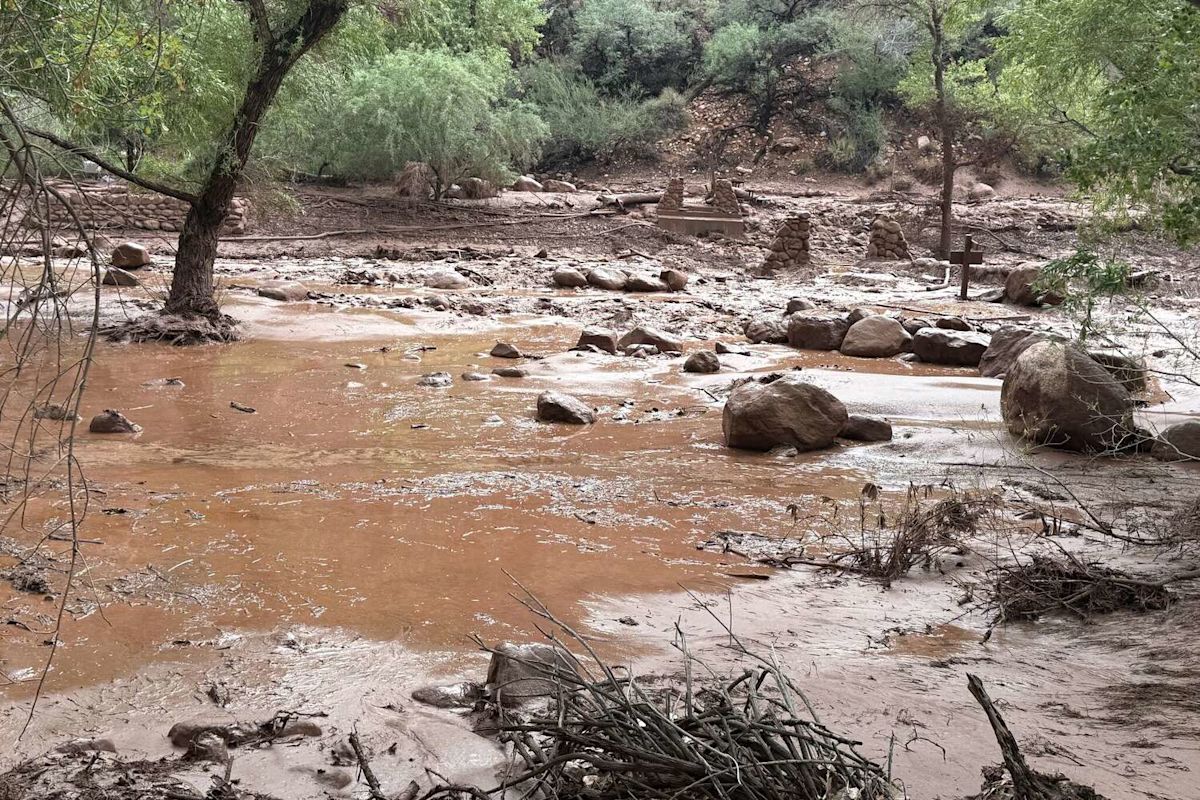
A devastating flash flood in Grand Canyon National Park has left over 20 people missing or unaccounted for, as the area grapples with the aftermath of the catastrophic event. The flooding, which struck Bright Angel Canyon on Saturday, was triggered by a sudden downpour that unleashed a torrent of mud and debris, overwhelming the already fragile infrastructure of the area.
The National Park Service (NPS) reported that intense thunderstorms, which dropped more than an inch of rain within an hour, hit the canyon around 2:30 p.m. Saturday. The deluge, which struck areas recently affected by the Dragon Bravo Fire, unleashed a slurry of mud and debris that surged through the canyon, causing widespread damage.
The floodwaters rose rapidly, exceeding five feet in just 10 minutes, overwhelming bridges across Bright Angel Creek and forcing the closure of one of the park's most challenging trails. A flash flood watch remained in effect throughout the Grand Canyon through Monday, as forecasters warned of more dangerous downpours in Arizona and Utah.
On Sunday morning, the NPS reported that 62 campers and hikers were airlifted out of the affected area. However, as of Sunday afternoon, the number of missing individuals had risen to over 20. The NPS and the Arizona Department of Public Safety are currently conducting an intensive search and rescue operation to locate those still unaccounted for.
Park officials have closed Phantom Ranch, Bright Angel campground, the Phantom Ranch canteen, and cabins, along with the North Kaibab Trail. The Colorado River was also closed to traffic after debris entered the waterway. The Black Bridge and Silver Bridge, which cross the Colorado River, have also been closed.
The park service warned that additional inner canyon closures may be necessary as the threat of more thunderstorms and heavy rainfall persists. Cell phone service throughout much of Northern Arizona remains difficult to maintain, further complicating search and rescue efforts.
The flash flood occurred just a year after the Dragon Bravo Fire swept through the Grand Canyon's North Rim, destroying a historic lodge and leaving the landscape vulnerable to debris flows. The fire altered the physical and chemical makeup of the soil, making it more susceptible to water and increasing the risk of flash flooding.
A NPS assessment of the burn scar last summer found that debris flow risk was localized to steep, confined drainages, like Dragon Creek and upper Bright Angel Creek. The National Weather Service warned of a slight risk of excessive rainfall capable of triggering flash flooding across the Four Corners region on Monday, with a moderate risk in south-central Utah.
The sudden downpour on Saturday far exceeded the National Weather Service's flash flood guidance for the Grand Canyon, prompting the agency to issue a warning. Short-duration rain bursts, such as thunderstorm downpours, are more likely to trigger debris flows than long-duration moderate rainfall.
As the search and rescue operation continues, the Grand Canyon community and beyond mourns the loss of those missing and expresses gratitude for the efforts of the NPS, the Arizona Department of Public Safety, and other emergency responders who have worked tirelessly to locate the missing individuals and mitigate further damage.






(0)