
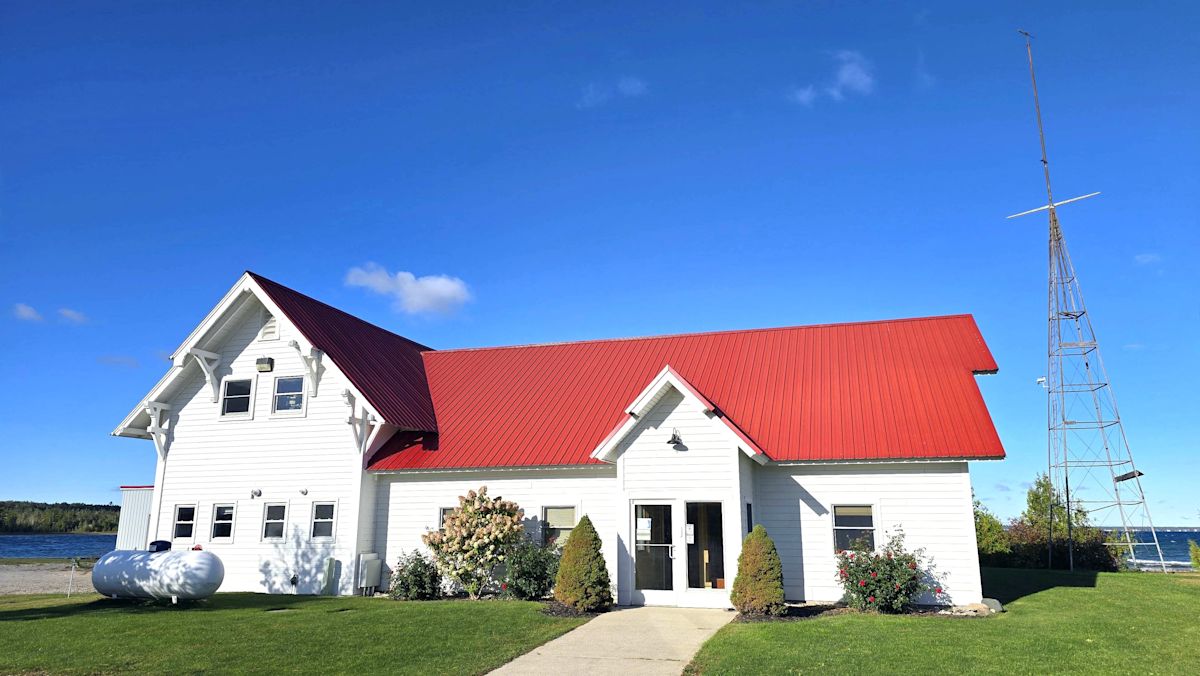
A landmark institution on the shores of northeastern Lake Huron is preparing to celebrate a century and a half of continuous maritime safety and scientific service. The Hammond Bay Biological Station will officially mark its 150th anniversary on September 30 with a series of public events, according to a recent community announcement. The milestone observance invites the regional community to explore the facility’s layered past, which bridges nineteenth-century maritime rescues with modern aquatic research.
The celebration begins with guided public tours of the station’s operational grounds, located at 11188 Ray Road in Millersburg. Organizers have scheduled three separate tour sessions throughout the afternoon on September 30, taking place at 1:00 p.m., 2:00 p.m., and 3:00 p.m. These walking tours are designed to give community members a firsthand look at the facility's day-to-day operations and ongoing scientific endeavors.
Due to physical capacity constraints across the station facilities, admission for the afternoon tours is limited, and visitors are required to register in advance. Members of the public who wish to attend can secure their reservations by sending an email to msigmon@glfc.org or by telephoning 989-734-4768, extension 112. Event planners encourage interested area residents to reserve their slots early to guarantee entry.
Following the daytime site tours, the anniversary commemoration will transition to an evening program in nearby Rogers City. Starting at 6:00 p.m., the Rogers Theater, located at 257 North 3rd Street, will host a special public presentation dedicated to examining the facility's multifaceted 150-year legacy, as well as its future trajectory.
The evening event will open with official welcoming addresses delivered by Marc Gaden, executive secretary of the Great Lakes Fishery Commission, alongside Lauren Holbrook, a communications associate representing the Hammond Bay Biological Station. Their opening remarks will formally commence the community-focused evening of historical reflection and scientific discussion.
The main segment of the theater program features a distinguished roster of scheduled speakers who will provide diverse perspectives on the station’s history. Attendees will hear from former Rogers City Mayor Beach Hall, Hammond Bay Biological Station Science Communication Specialist Andrea Miehls, and Station Supervisor Nick Johnson, each discussing the institution's heritage and ongoing research contributions.
The long history of the facility dates back to 1876, when it was initially established as an outpost for the U.S. Life-Saving Service along the northeastern Lake Huron shoreline in Michigan. During this early era, the surrounding freshwater coastline was heavily traversed by commercial and transport vessels operating in notoriously perilous conditions.
Throughout its initial decades, the station was primarily tasked with maritime emergency response. Station crews maintained constant vigilance over Lake Huron waters known for hazardous navigational conditions, routinely deploying rescue equipment and assisting sailors who encountered distress along Michigan's rugged shoreline.
The outpost experienced its first major organizational evolution in 1915, when the federal government integrated the U.S. Life-Saving Service into the newly established U.S. Coast Guard. Under Coast Guard administration, the Millersburg facility maintained its critical maritime safety operations, sustaining life-saving and coastal protection duties for several additional decades.
A decisive turning point occurred in 1950, when the site was formally converted from a military maritime outpost into the Hammond Bay Biological Station. This transition shifted the property's primary focus away from search-and-rescue operations toward dedicated environmental science, fisheries biology, and freshwater conservation.
Under its newly established scientific identity, the station became an essential center for efforts to control the invasive sea lamprey population throughout the Great Lakes. The parasitic species had inflicted severe harm on native fish stocks across the basin, necessitating innovative scientific interventions to manage their numbers and mitigate ecological damage.
According to organizers, the station's ongoing aquatic research and control initiatives have played an instrumental role in preserving and restoring Great Lakes fisheries over the past several decades. The scientific methodologies developed and executed at the Millersburg site have directly contributed to stabilizing vital regional aquatic populations.
Organizers noted that the upcoming 150th anniversary festivities serve to honor this long-standing record of public service and recognize the profound connection between the station, the Great Lakes ecosystem, and surrounding coastal communities. The facility remains an integral fixture in the regional identity of northeastern Michigan.
Guests attending the daytime open house in Millersburg will have an opportunity to observe the working environment where specialized scientific initiatives are conducted. The tour program allows community members to gain greater insight into how current researchers maintain the station's legacy of active aquatic science.
The concurrent evening presentation at the Rogers Theater will tie these historical threads together, reviewing the station's transition from a nineteenth-century rescue station to a modern research facility while outlining its continuing commitment to fisheries stewardship and scientific discovery for years to come.








(0)