
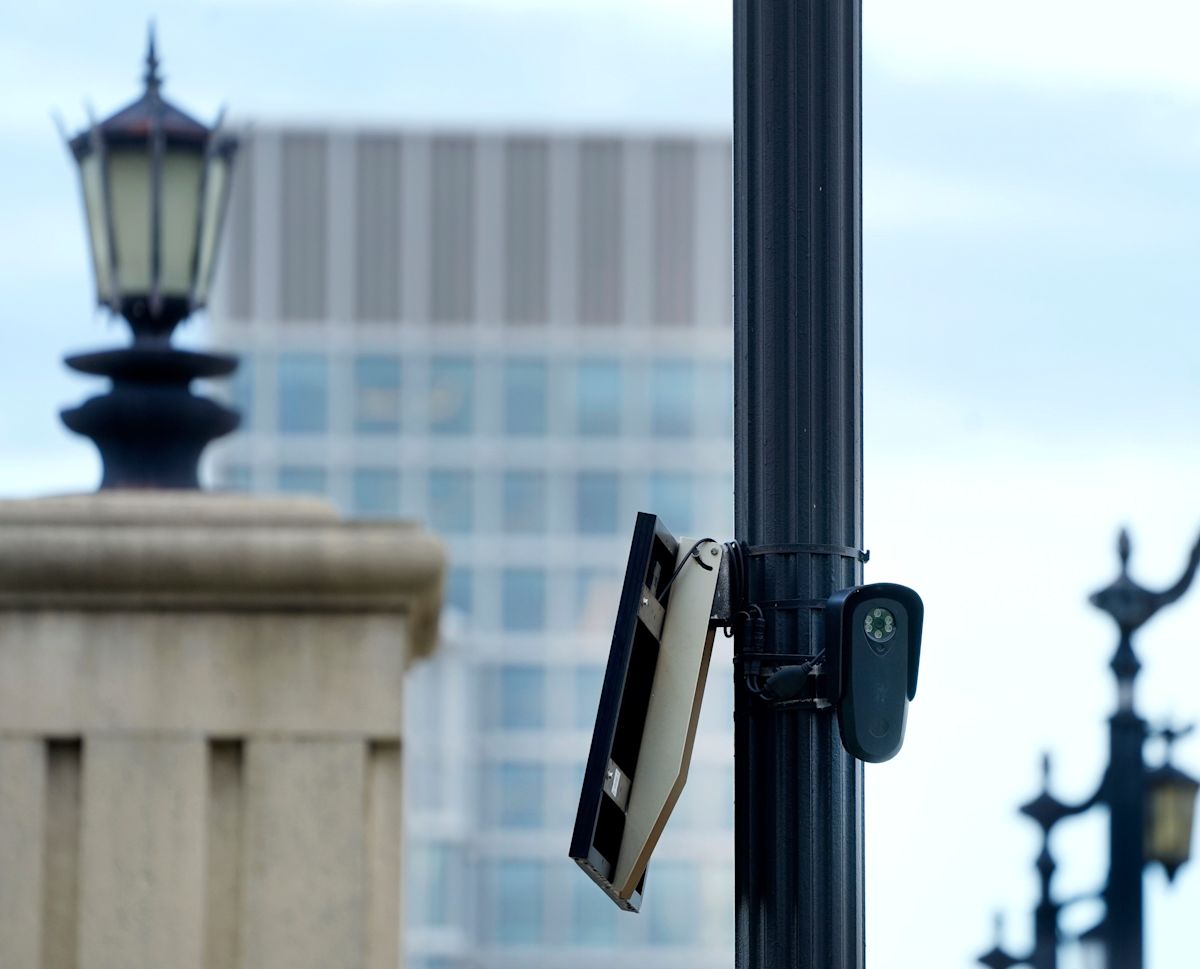
A sudden regulatory directive from state transportation authorities has forced law enforcement agencies across Florida to dismantle automated license plate readers along major thoroughfares, igniting an urgent conversation in Alachua County about public surveillance, data retention, and privacy safeguards. The regulatory shift has brought local law enforcement officials and civic researchers into alignment over the need for formal public rules governing surveillance technology.
The policy shift began when the Florida Department of Transportation formally revoked its general use permits for automated license plate readers operating within state highway rights-of-way. State officials established a strict 30-day timeline requiring local law enforcement bodies to take down any monitoring hardware installed across these specific corridors, abruptly disrupting camera networks across the region.
Following the state's administrative order, Alachua County Sheriff Chad Scott confirmed that 27 automated license plate readers in the county met the criteria for mandatory removal. While devices installed within state-controlled highway boundaries are being taken offline, numerous automated camera units situated outside those specific rights-of-way will continue normal operations across local streets and municipal jurisdictions.
The state-mandated takedown coincided with local efforts led by Sam Cornell, an independent researcher and organ recovery surgical coordinator based in Gainesville. Cornell recently addressed the Alachua County Commission, urging the five-member board to conduct a thorough review of the local surveillance system and implement clear policy boundaries rather than dismantling the program entirely.
During his presentation to county leadership, Cornell advocated for four specific regulatory measures: establishing significantly shorter data retention windows, creating independent audit mechanisms, ensuring public transparency regarding which personnel can query the database, and providing a comprehensive financial accounting of what the overall network costs taxpayers.
The five county commissioners responded receptively to the proposal, reaching a consensus that the automated license plate reader program warranted a closer, detailed examination. However, the timeline for local deliberation accelerated drastically following the state transportation department's sudden permit revocation, which transformed an ongoing policy discussion into an immediate operational transition.
The state's sweeping permit revocation addressed questions Cornell had spent the summer investigating through extensive public records requests. A central inquiry in his preliminary findings focused on whether local law enforcement agencies possessed valid and active Florida Department of Transportation permits for every roadside device, a question ultimately answered by the state's blanket revocation.
Despite raising concerns over oversight, researchers and local officials acknowledge that license plate reader systems serve clear investigative purposes. Law enforcement agencies rely on the automated vehicle tracking network to assist in recovering stolen automobiles, locating missing or vulnerable individuals, and gathering critical evidence during active criminal inquiries.
Sheriff Scott has defended the investigative utility of the technology, noting that license plate data has played an instrumental role in enabling his agency to solve serious violent offenses, including homicides and armed robberies. Independent reviews of the system have found no reason to question the sheriff's accounts regarding the tool's effectiveness in major felony cases.
Similar operational results have been documented in neighboring jurisdictions. Public records obtained from Lake County detailed two dozen separate criminal case summaries illustrating how license plate readers assisted detectives in tracking suspects and resolving active investigations, supporting claims regarding the hardware's tactical value.
Nevertheless, privacy advocates stress that geographic boundaries on state roadways cannot substitute for comprehensive civil liberties protections. The physical removal of cameras along state-maintained highway rights-of-way resolves a jurisdictional permitting issue, but it does not address core questions surrounding how motorist information is stored and searched across remaining active cameras.
Sheriff Scott has echoed similar concerns regarding the scope of surveillance, emphasizing that the vast majority of motorists photographed by automated readers are law-abiding citizens commuting to work or transporting children to school. The sheriff explicitly stated that ordinary drivers are not criminal suspects and must not be treated as such by automated law enforcement systems.
Both law enforcement leadership and local researchers agree that key operational questions must be resolved through public policy. These issues include clarifying exactly what types of metadata and imagery are gathered, how long the collected data is preserved in law enforcement databases, which external agencies are permitted access, and what specific legal standards justify conducting a database search.
The ongoing evaluation of the county's surveillance apparatus has maintained a collaborative tone, aided by the Sheriff's Office's willingness to provide documentation. When public records concerning the camera network were requested, the agency delivered the necessary files free of charge in approximately one week, allowing community discussions to focus on verifiable evidence rather than institutional friction.
Cornell has signaled plans to continue discussions with additional representatives from the Alachua County Sheriff's Office to evaluate proposed program standards, committing to share the results of those administrative dialogues publicly with residents and county policymakers.
As Alachua County adapts to the state transportation department's highway camera removals, local stakeholders are seeking to balance technological support for law enforcement with robust civilian oversight, emphasizing that automated surveillance systems must ultimately be governed by rules established with public consent.






(0)